
The Castle
The Castle (German: Das Schloss) is the last novel by Franz Kafka, first published posthumously in 1926. It is a seminal work of modernist literature, often associated with the genres of absurdism and existentialism. The novel was published by Kafka's close friend Max Brod, who bravely ignored Kafka's explicit request to burn all his unpublished manuscripts after his death. Through Brod's decision, the world gained one of the most enigmatic and influential works of the twentieth century. The story is set in a nameless, snow-covered Central European village, overshadowed by a massive castle perched on a hill. The castle is never clearly described but functions as a symbol of ultimate, inaccessible authority. The protagonist, known only by the initial K., arrives in the village claiming to be a land surveyor summoned by the castle authorities. From the moment he enters the village inn, he is met with suspicion and resistance. The entire plot unfolds as K. attempts to make contact with the castle's officials, especially a powerful bureaucrat named Klamm. He is given two assistants, who seem more intent on hindering than helping. He becomes involved with a barmaid named Frieda, who was Klamm's mistress, and their relationship further complicates his quest. Despite his persistent efforts, K. never reaches the castle. He is trapped in a web of contradictory rules, endless paperwork, and uncooperative villagers. The novel breaks off in mid-sentence, leaving the story unresolved. Kafka reportedly told Brod that the intended ending was that K. would be granted permission to stay in the village only on his deathbed, but this was never written. The narrative is characterized by Kafka's signature style: long, intricate sentences, precise yet dreamlike imagery, and an atmosphere of pervasive anxiety and absurdity. Core themes include alienation, the absurdity of bureaucracy, the inaccessibility of power, and the existential struggle for meaning and belonging. The novel reflects Kafka's own deep-seated feelings of isolation and his critical view of impersonal, hierarchical systems. Writing background: Kafka began The Castle in 1922, during a period of declining health after being diagnosed with tuberculosis. He worked on it intermittently until his death in 1924. He was never satisfied with the manuscript, which contributed to his desire to have it destroyed. The novel's incomplete state has become a defining feature, inviting a wide range of interpretations—as a religious parable about divine grace, a critique of modern bureaucracy, a psychological allegory of the individual's struggle against authority, or an existentialist depiction of the absurd. The Castle has had a profound influence on twentieth-century literature and thought. It popularized the term "Kafkaesque" to describe situations of nightmarish, labyrinthine bureaucracy. It inspired existentialist philosophers like Albert Camus and Jean-Paul Sartre, and later writers such as Haruki Murakami, who named his novel Kafka on the Shore as a homage. During the Nazi regime, Kafka's works were banned due to his Jewish heritage, but they survived and were championed by post-war critics. Today, The Castle is considered a cornerstone of modernism, a profound exploration of the human condition, and a testament to Kafka's unique vision. Its open-endedness continues to provoke debate and analysis, ensuring its enduring relevance.
The novel has seen multiple English translations since its first publication. The initial translation by Willa and Edwin Muir, based on Max Brod's 1930 German edition, was published by Secker & Warburg in England and Alfred A. Knopf in the United States. A 1941 edition included a homage by Thomas Mann, and a 1954 edition added sections translated by Eithne Wilkins and Ernst Kaiser. Later translations include J. A. Underwood's 1997 version, Mark Harman's 1998 translation, and Anthea Bell's 2009 edition, all based on the critical German text established by Malcolm Pasley. Harman's translation, which includes an eleven-page discussion of his translation philosophy, was praised by Eric Ormsby for its accuracy but criticized for occasionally missing the correct tone. J. M. Coetzee noted that while Harman's version strives for strangeness and denseness, it may become obsolete as tastes change.
About the Author
Franz Kafka (July 3, 1883 – June 3, 1924) was a German-language novelist and short story writer born in Prague, then part of the Austro-Hungarian Empire. He is widely regarded as one of the most influential writers of the 20th century. Kafka was born into a middle-class, German-speaking Jewish family. His father, Hermann Kafka, was a domineering merchant, and his mother, Julie Löwy, came from a well-to-do Jewish family. The young Kafka had a difficult relationship with his father, which later became a central theme in his writing, most notably in his long letter "Letter to His Father." He received his early education in German schools in Prague, then studied at the German Charles-Ferdinand University, initially pursuing German literature but switching to law under his father's pressure. He earned a doctorate in law in 1906. After graduation, he worked briefly at a law court and then from 1908 at the Workers' Accident Insurance Institute for the Kingdom of Bohemia in Prague, a semi-governmental insurance company. His job involved processing compensation claims for injured workers, which gave him firsthand experience of bureaucracy and bureaucratic absurdity. Kafka worked at the insurance company until his health declined. He wrote primarily at night, often feeling that his day job robbed him of time for writing. He referred to this as "the double life." Kafka had several significant romantic relationships, especially with Felice Bauer and Milena Jesenská, but he never married, often breaking off engagements due to his own anxieties and dedication to writing. He corresponded voluminously, and his letters provide deep insight into his inner life. Kafka's major works include the short stories "The Judgment" (1912), "The Metamorphosis" (1915), and "In the Penal Colony" (1919), and the novels The Trial (published 1925), The Castle (1926), and Amerika (1927). Only a few of his works were published during his lifetime; the rest were published posthumously by his friend Max Brod, against Kafka's explicit wish that they be destroyed. In 1917, Kafka was diagnosed with tuberculosis, which led to a long period of illness and sanatorium stays. He died on June 3, 1924, in Kierling near Vienna, at the age of 40. Kafka's writing is characterized by its precise, clear prose, yet it conveys a sense of anxiety, absurdity, and alienation. His themes include the individual's struggle against incomprehensible authority, the dehumanizing effects of bureaucracy, and existential dread. The term "Kafkaesque" has entered the English language to describe nightmarish, labyrinthine situations. His work has influenced existentialism, absurdism, and modernism, and has inspired writers such as Albert Camus, Jean-Paul Sartre, and Haruki Murakami. Despite his relative obscurity during his lifetime, Kafka is now celebrated as a literary giant whose works continue to resonate with readers worldwide.
StoryFlow
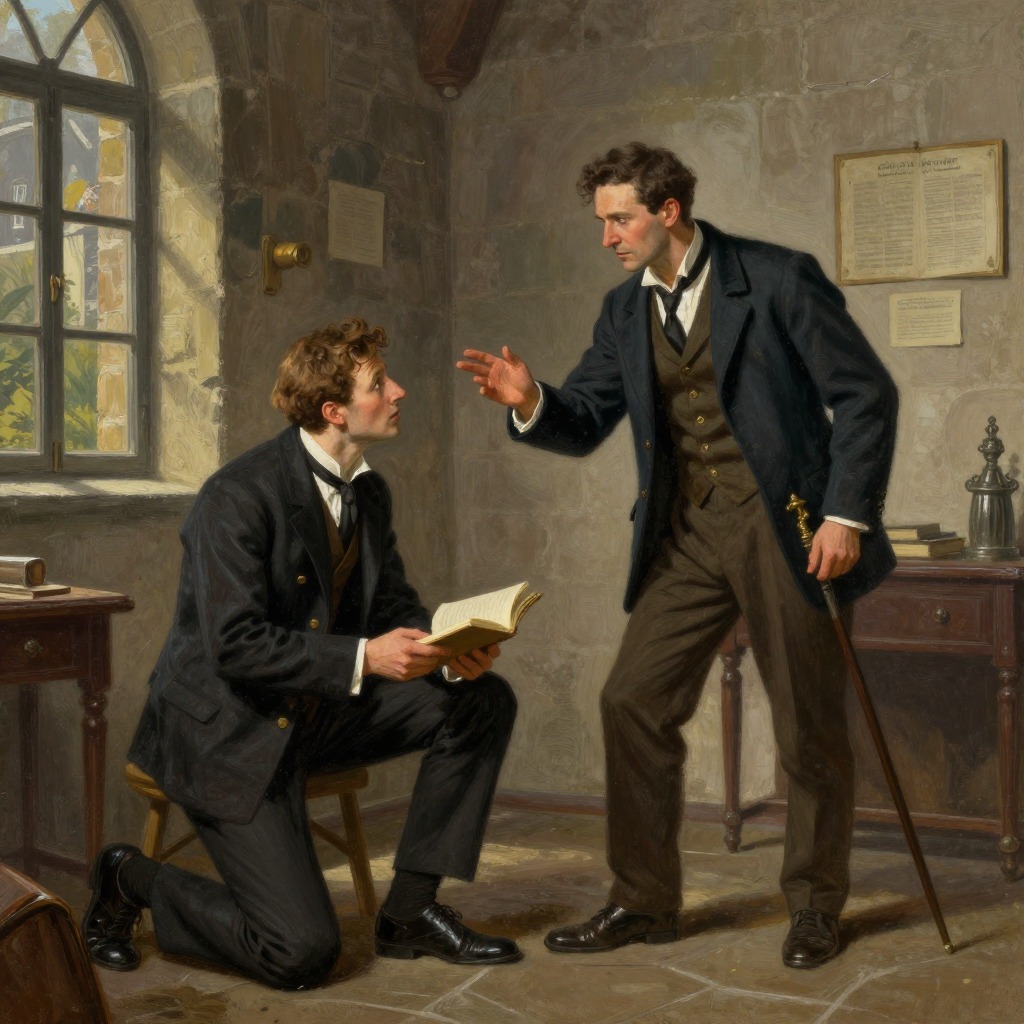
The Land Surveyor Claim
K. tries to make the castle acknowledge his profession and his right to stay.
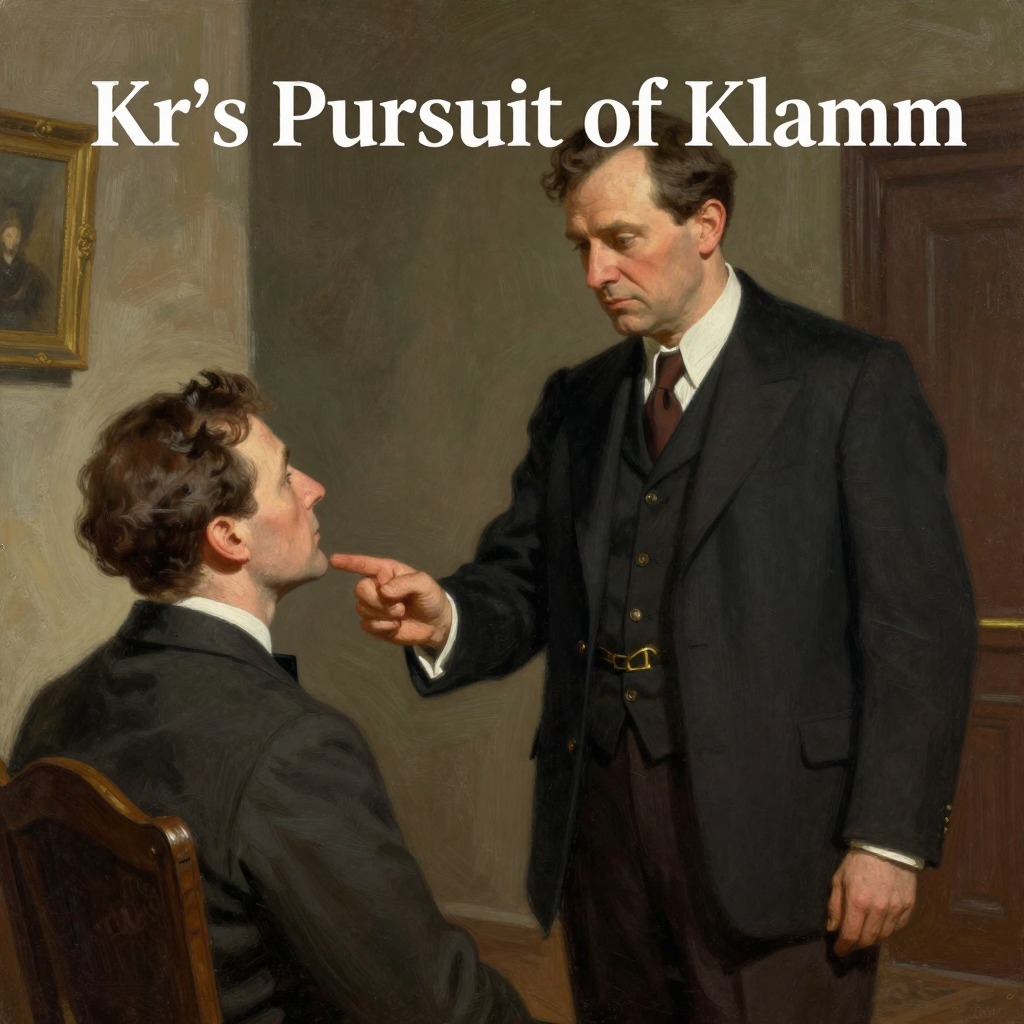
K.'s Pursuit of Klamm
K. seeks direct contact with the inaccessible official Klamm again and again.
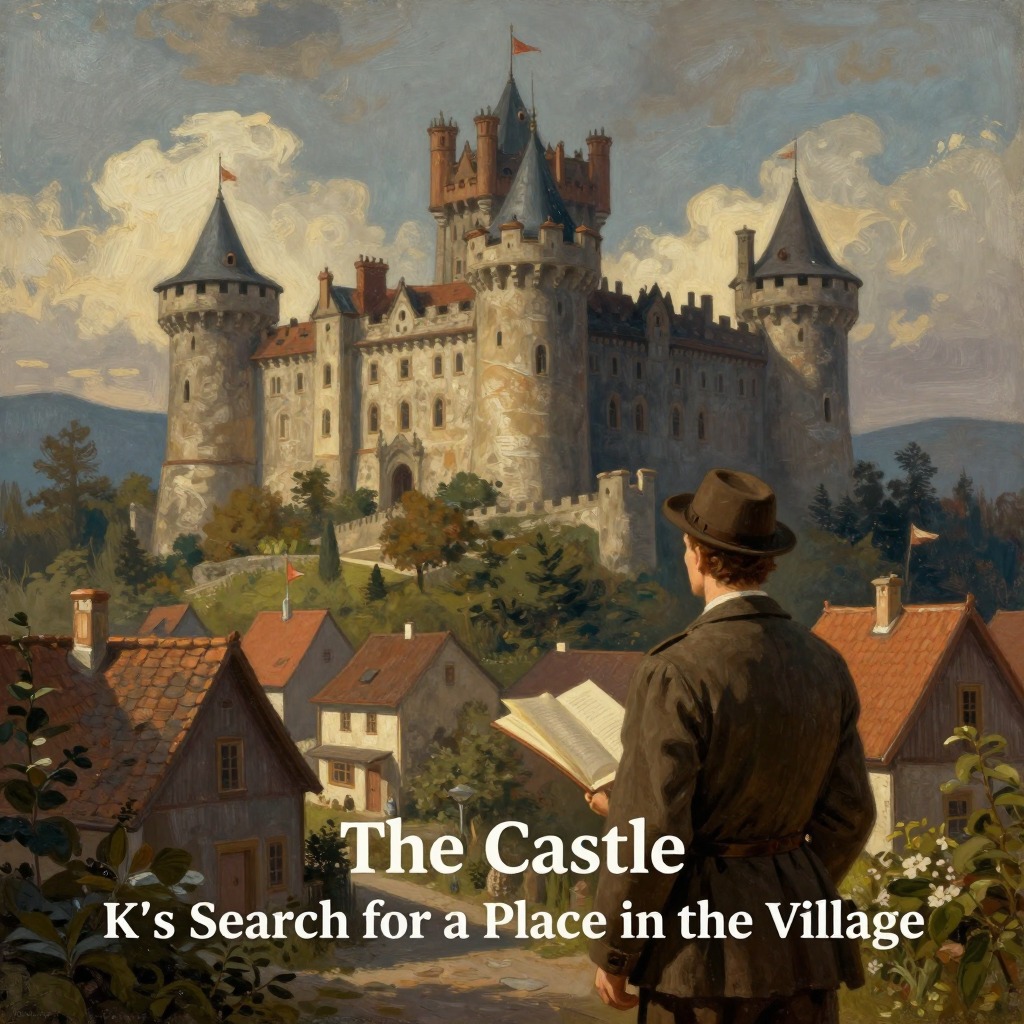
K.'s Search for a Place in the Village
K. tries to establish a foothold in the village while the castle remains out of reach.
